Did a private tour with my parents and brother. James was so nice and answered all of our questions. His presentation of the mill was fantastic and we had such a fun time and learned so much. For any tourists in the area, this is absolutely worth a stop. He showed us how to make brown bread and we took home a loaf for each of us. Now we’re back in the states and enjoying making it again at home. Next time we’re in Ireland we will make sure there is space in our luggage to bring home a few bags of flour.
Advertisement
Fabulous experience and tour. Absolute value for money. What a quality tour, James Jr did such an amazing job. Their spirit of generosity shows in their fair pricing scheme. They are doing such a service in preserving this piece of history.
My only comment is that poorly behaved children did make it hard to hear at times bit not really much they could do about that. Maybe over 7s only?
Advertisement
Advertisement
James is a great person! The Mill is not open at fixed times, however it is a lovely place. It has a fantastic atmosphere of an Irish gem that has been there for hundreds of years.
Other than producing a high quality wholemeal flour, it is simply a living part of Irish history. We have developed a short documentary about it and had a great time there. Not to be missed!
Advertisement
My review is for their wholemeal flour. If you are into making brown bread look no further. I made my first batch using this flour tonight. My 85 year old mother in law said is was the nicest she has ever tasted. Its old school flour, full of flavour and the crust on the loaf came up lovely and crunchy. Fabulous product would highly highly recommend.
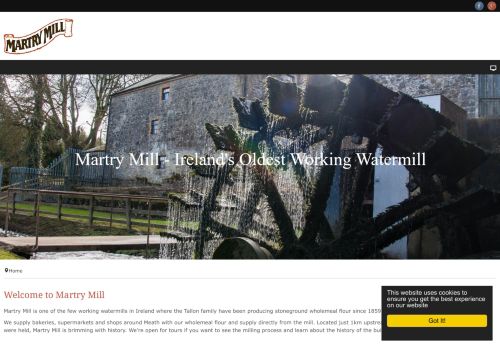
Group of three adjoining two-storey mill buildings, on L-shape plan, built c.1800. Probably built on site of an earlier mill structure. Buildings constructed of limestone rubble with dressed limestone quoins to corners and brick eaves courses. Pitched slate roofs to all structures. Stone surrounds to door and windows of main mill building and intermediate structure with stone sills and replacement timber sash windows. Brick surrounds to openings on eastern-most building. The main two-storey three-bay mill building is located to the west of the complex and runs perpendicular to the River Blackwater and main alignment of mill complex. A working waterwheel (undershot), c. 10-12ft in diameter, constructed of cast-iron with timber is located on the north gable of this structure. Three-bay two-storey building adjoins to west. Central loading bay (full-height) with timber beam and remains of sack-hoist to first floor of this structure. The timber louvred vent in the roof of this structure indicates that it was used as a grain-drying kiln. Stone-lined tailrace, c. 10m in width, headrace with timber and metal sluice gates and stone weir to site.
Advertisement